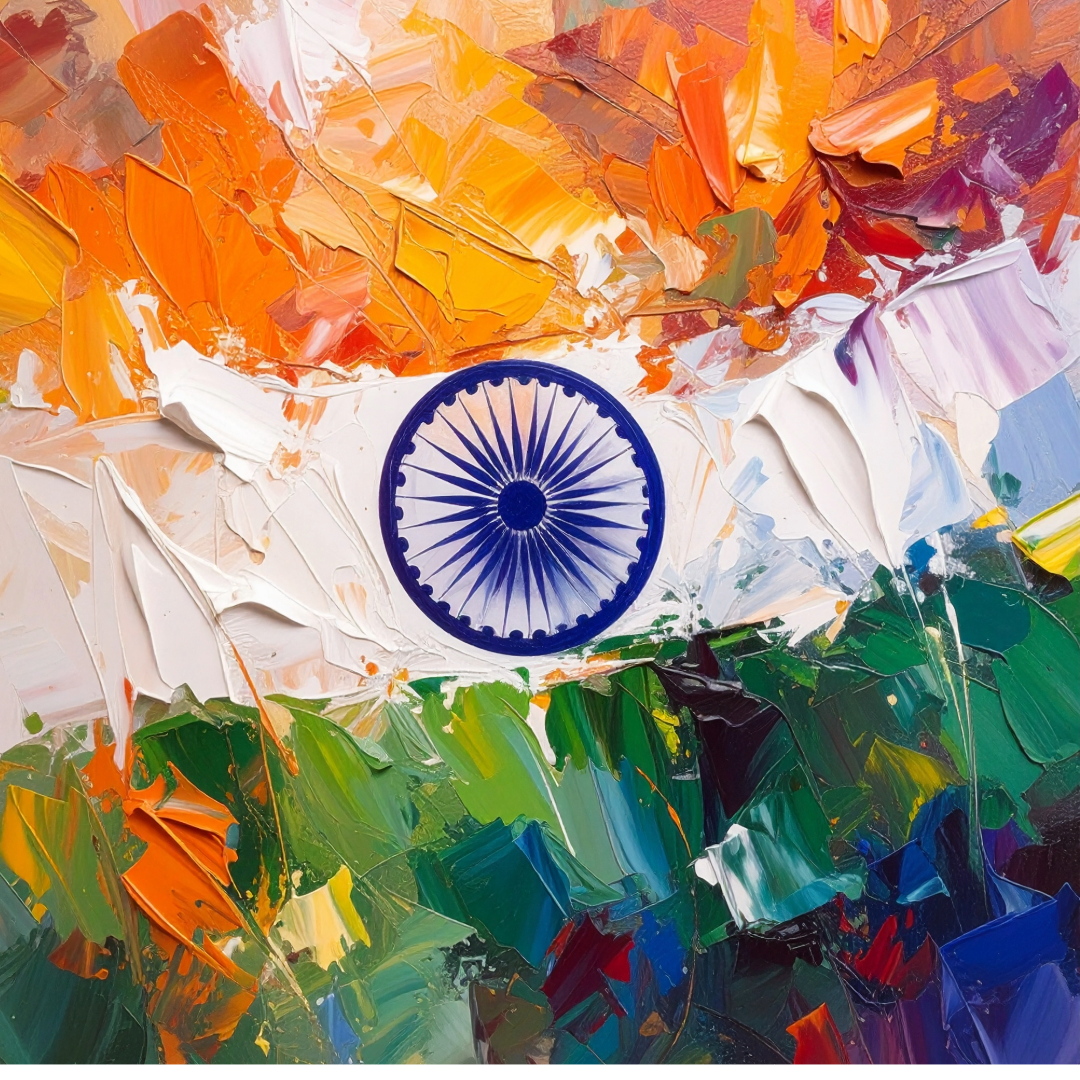
I cannot say for certain when my fascination with India began. But all I know is that the country and its people fascinate me. The root of my interest lies in Bollywood films – films, not Indian Television (the type to be found on ZeeWorld), because for the life of me, I cannot stand the ridiculousness of Indian TV. However, where it fails in the latter, it doubly makes up for it in the former. My favourite Indian movie is Kuch Kuch Hota Hai. Cliché? Maybe. I cannot be bothered. I first watched the movie as a secondarian, and have since watched it a couple more times. I think the acting is superb. But beyond the acting, it’s the storytelling that really enthrals me. My favourite scene in the movie is the dance scene between Rahul (Shah Rukh Khan) and Anjali (Kajol) at the gazebo. The cinematography of that scene is sublime. I have found myself watching that scene over and over, thinking that if I were to direct a movie, I’d incorporate several elements of that scene.
For the longest time, as a child of Western civilisation, I have been acculturated by Hollywood. Knowing or watching the latest Hollywood movie had always been a flex at secondary school. I see it even now, my dormmates and I sitting on buckets, listening to stories about the latest films: High School Musical, Cheetah Girls, Pirates of the Caribbean, etc., etc. Hollywood has its gifts, but it is neither the only storyteller nor the best. There are more meaningful stories told across the world. As such, I have since developed a growing disenchantment with Hollywood movies, particularly with their unrelenting need to incorporate sex, profanity and nudity into their films. I must say, at this point, I am also not so keen on science fiction movies and overly clean and sharp films, both of which are common in Hollywood.
My search for an alternative led me to India: Bollywood, Tollywood, Kollywood, etc. While my early contact with Indian movies was somewhat accidental, in recent years, I have deliberately sought out Indian films on Netflix or Amazon Prime. I have reached the stage where, in movie dialogues, I no longer, for example, translate one minute (pronounced either as “ache minute” or “eke minute”; I’m not sure which is closest) when I hear it spoken in their language. I have also found myself desirous of an Indian friend, and even wanting to wear a Sari or Lehenga.
Now, India, not being immune to the ascendancy of the West, is not without woke or explicit movies. In some of their films, one senses that many are undeniably Americanised, or broadly, Westernised. But in the majority of films I have watched, there seems to be a groundedness, genuineness and relatability that is increasingly lacking in Hollywood. I perceive that Indian filmmakers carefully craft the image of India they want the world to see: their love for India, romanticised as the love and devotion of a child to its mother; the reverence by the ghats along the River Ganges; their veneration of the Hindu gods and a patriotism I admire. I cannot count the number of times I have heard ‘I am an Indian’ or something of the sort belted out by a character in a movie. Even when movies are based on social issues, they seem to be done with respect for India. In Homebound, Shoaib, having the opportunity to leave his country for Dubai in the face of discrimination (as a Muslim) and being poor, said, “Our land, our skies, our streets, our friends, our language, all this is home to me. How can I leave it all behind?”
In India, I find kinship. Having been colonised by the British, our shared history is somewhat apparent. But there’s more. In addition to being such a populous and multicultural country like Nigeria, it has similar pressure points as well: caste and religion in their case, tribe and religion in ours. There is classism and the division between the haves and have-nots.
Furthermore, India and Nigeria both practice a federal system of government that is still in the process of meeting the aspirations of their people. Like the Nigerian Constitution, certain rights and freedoms are guaranteed to all citizens. Yet, the lived experiences of many tell a different story. Movies like Court: The State vs. Nobody, The White Tiger and 12th Fail, to name a few, dissect the dichotomy of citizenship and a responsible government. These are themes that Nigerians are familiar with.
I have also begun to read Indian authors. In 2023, I bought and read Vikram Seth’s A Suitable Boy after watching the serialised adaptation on Netflix. The book is as vast as the Classics I am drawn to reading these days. In it, Seth examines race, class, constitutionalism, friendship, love, family, and more. It is the kind of book that draws you into its orbit, leaving you feeling displaced at the end because fiction seemed like better land than reality.
Yet, I reckon that what is happening to me is not isolated. India and Bollywood are to me what South Korea and K-drama are to a host of people. It seems to me that there is a steady movement Eastward. I suppose we are experiencing an acculturation of the stronger powers of Asia channelled through intentional storytelling and fueled by the lack of direction of Western powers and their frontrunner: the not-so-almighty USA. It seems to me that we are all getting prepped up for the ascendancy of the South-East.
Scholars of International Relations argue that we are headed towards Multipolarity, that is, more than one country holding the balance of power. While I still hold this view, I’m interested in India’s role in all of these. I must confess that my interest may be biased and may also stem from fear of being drawn into China’s web. Yet, while I hold no grudges against China, Japan or S. Korea, my bet remains squarely with India. And without prejudice to Nigeria, I continually root for its victory.


Leave a Reply